
Articles
Exploring History's Greatest Adventures throughout time!


HOW TO RESEARCH HISTORIC TOPICS
Research involves reviewing historic documents, digging up artifacts, and getting multiple points of view. The goal of research is to fully understand the source data and satisfactorily answer questions as accurately as possible.
Research is a process not an action
Typically the process goes like this:
Ask your question
Choose your sources and gather data
Sort and process the information
Develop your answer
Cite your sources
Ask your question
What is it you want to know? This is where you plan your investigation. Be prepared to change or form new questions as you uncover facts.
For example, you want to know who invented the wheel. As you perform your research, you realize that the wheel existed before recorded history. That means you probably won’t ever be able to answer “who” specifically invented it. The answer doesn’t exist.
But you might be able to determine approximately when it was invented based on archaeological evidence. You may also learn the oldest evidence of use to conclude where it was likely invented. This can help narrow down your search to a specific species, people or tribe.
Choose your sources and gather data
There are three kinds of sources:
Primary
Secondary
Tertiary
1. Primary Source:
Direct evidence about your topic. This includes things like archaeological evidence, account books (such as the Domesday Book), boat passenger lists, diaries and other contemporary writings. “Contemporary” means it was written or recorded by someone who personally witnessed the event, experienced the time, or created the data.
The reference section of a library may lead you to Primary sources. You can also consult:
Library of Congress at https://www.loc.gov/programs/teachers/getting-started-with-primary-sources/finding/
National Archives at https://www.archives.gov/education/research/primary-sources
Smithsonian at https://learninglab.si.edu/collections/primary-sources/MhkNadPOAl59VFw1
2. Secondary Source:
A commentary or interpretation of a primary source, such as a journal article or news story. This type of source includes retellings from someone who was not present during the event, even if the person was alive at the time.
3. Tertiary Source:
This third level source can refer to someone else’s assembly of information based on consolidated primary and secondary sources. Wikipedia, academic papers, magazine articles, and blog posts fall into this category.
Tertiary sources can help guide students to primary and secondary sources through their citations. Parents and teachers might encourage Level 2 students to use and cite trusted tertiary sources while encouraging Level 3 students to consult the primary sources for themselves to make their own interpretation.
Sort and process the information
Four blind men found an animal. One touched a leg and was sure he found a goat. One found the tail and thought it was a giraffe. One felt the fur and believed it was a dog. The last had the belly and thought it was a horse. None of them had the whole picture; therefore they couldn’t agree on the type of animal they had found. The hungry lion ate them all.
No single source should lead you to a final conclusion because no single source will have all the data. There’s an old saying that history was written by the victors. That means the stories you hear about antiquity – even when told by a primary source – can be incomplete, one-sided or wrong, especially if the author had an agenda or prejudice.
An agenda refers to why something was written. What purpose did it serve? Who did the writing and for whom did they write?
A prejudice can refer to the author’s leanings and if they wanted someone in the story to look bad – or good.
Agendas and prejudices can impact how the story was told, including omissions, exaggerations, and outright fiction. Secondary sources are based on interpretations and often hearsay, which can likewise be wrong. Sometimes the wrong story can be passed down for generations.
Consider the story of young George Washington chopping down a cherry tree and telling the truth about it to his father. For nearly two centuries, Americans believed it as hardcore fact. It wasn’t until a researcher noticed there was no primary source for the story. In fact, the first time it was written was after Washington’s death. The public was hungry for information about their hero and a minister and bookseller named Mason Locke Weems delivered. He first published Washington’s biography in 1800. Then he updated it several times and the cherry tree story was added in the 5th edition in 1806. Washington did have a reputation for honesty and maybe Weems wanted to encourage honesty for kids. Or maybe he was just looking to sell books with legendary stories. The point is, the cherry tree event probably never happened.
Likewise, there’s no actual evidence that famous characters like Robin Hood and King Arthur ever existed. But the stories have some root possibilities for which the primary sources may be lost to antiquity or haven't been found yet.
The key to successful historic research is to consult as many sources as possible. See if primary sources exist and, if so, what different sources have to say. See how their stories differ and how they are the same. Consider any potential prejudices and agendas. Keep in mind what the primary source, data, archaeological dig or other information does NOT tell you.
Then see how different secondary sources interpret the event. Review tertiary sources and decide if you agree with them. If you don’t agree, look for evidence to support your disagreement.
Develop your answer
After all that research and myth busting, you can finally draw a conclusion based on the evidence collected. Do you have any questions that remain unanswered due to lack of evidence? Is there enough evidence to support a possibility, even if not certainty? Write your conclusion so it reflects facts only and not your own or someone else’s opinion.
Cite your sources
A proper citation gives full credit to the originator of the data and includes enough information to enable a reader to find the source for themselves. Citing your source also gives you the opportunity to reflect on the reliability of the source information.
There are several ways to cite a source. Some methods are for academic use and others are for business. They may also vary by field. Historians usually use citations as presented in Chicago Manual of Style. You can find and learn more at https://www.chicagomanualofstyle.org/tools_citationguide.html.
Try out your new research skills
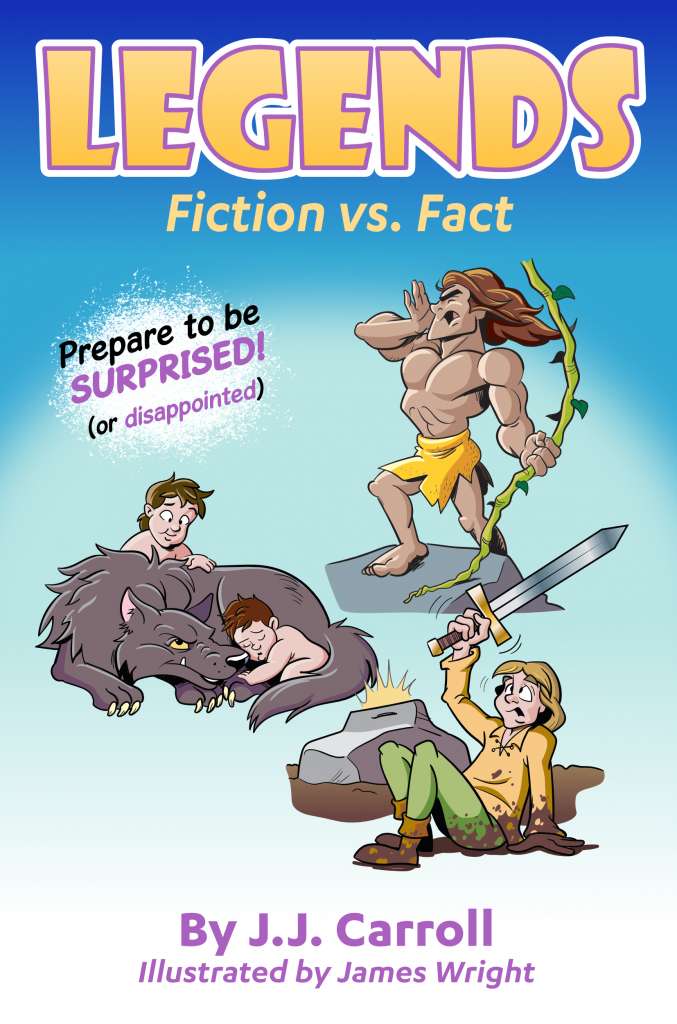
Legends: Fiction vs. Fact is 32 pages of fun stories that show the importance of research skills. It includes games and a legendary research project kids can try on their own.
Get the FREE PDF when you sign up for the Historic Books for Kids monthly newsletter.